What Your Leg Alignment May Tell You: Normal Legs, Knock Knees, and Bow Legs Explained
Have you ever looked at your legs and wondered whether they are shaped “normally”?
Legs naturally come in different shapes. Some people have relatively straight alignment, while others have a noticeable inward or outward curve. The terms knock knees and bow legs describe two common alignment patterns.
Understanding the differences can help you recognize what may simply be a normal variation—and when it’s worth talking with a healthcare professional.
1. What Is Normal Leg Alignment?
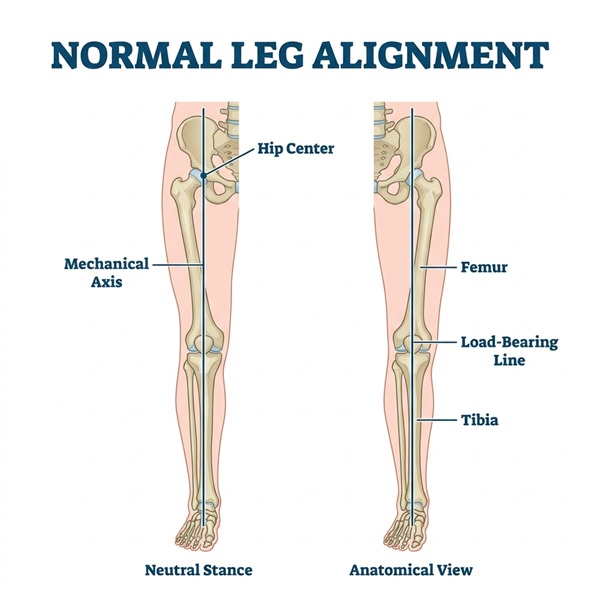
There isn’t one perfectly straight shape that every person’s legs must have.
When standing naturally, your hips, knees, ankles and feet should work together to support your body and allow you to walk comfortably.
Small differences in alignment are common and don’t necessarily mean something is wrong.
The important questions are often:
- Is the alignment causing pain?
- Is it getting worse?
- Is one leg noticeably different from the other?
- Does it affect walking or balance?
- Did the change appear suddenly?
These factors are generally more important than appearance alone.
2. What Are Knock Knees?
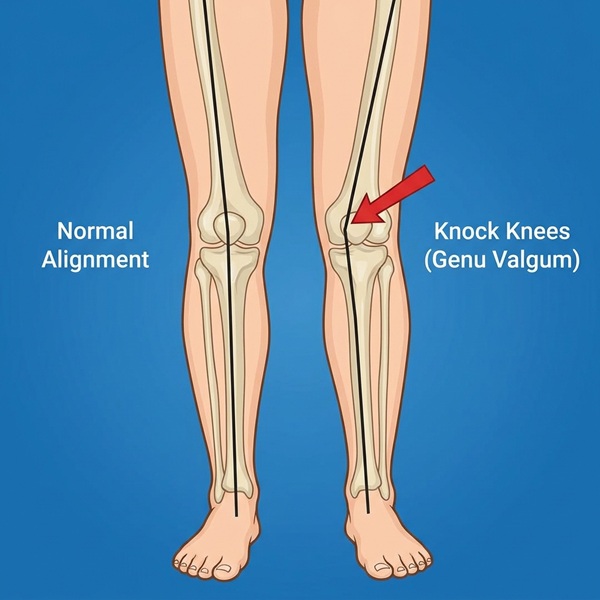
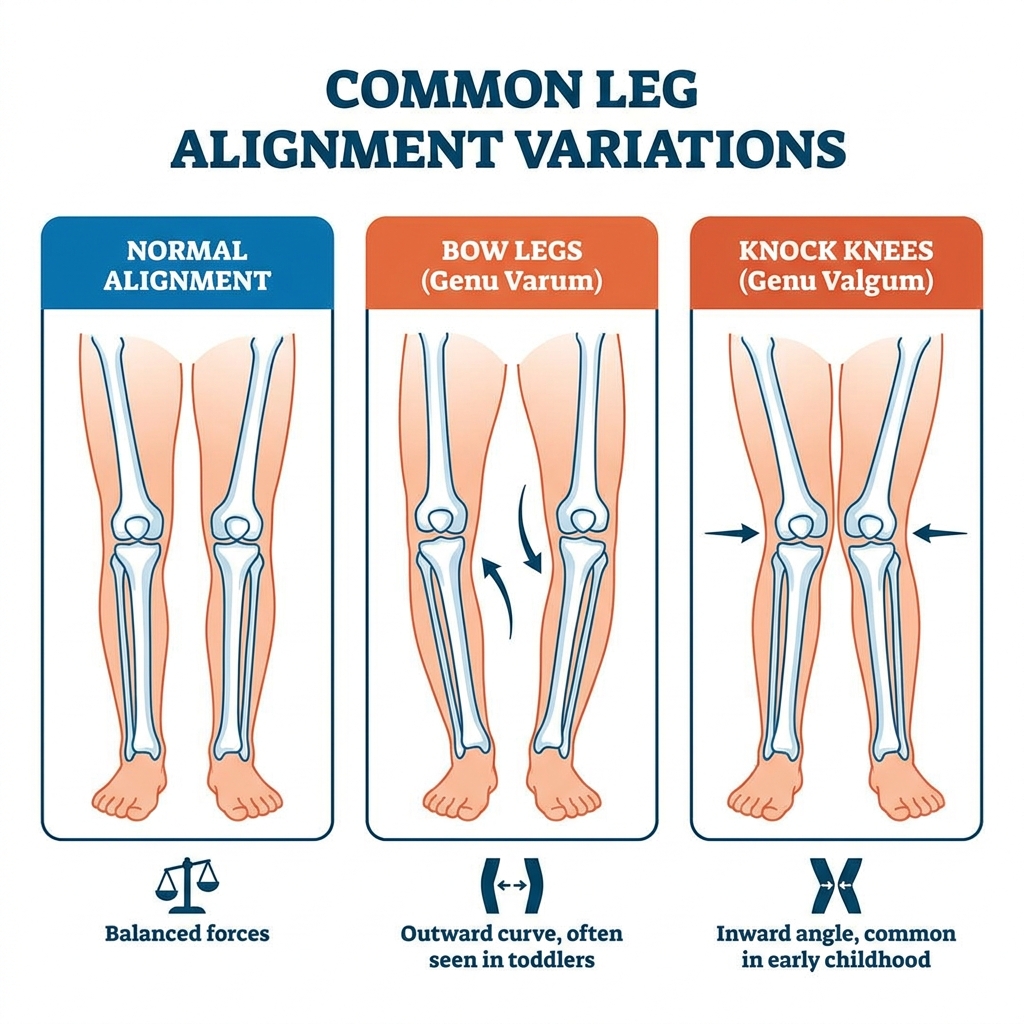
Knock knees, medically called genu valgum, occur when the knees angle inward.
When someone stands with their knees together, there may be a noticeable gap between the ankles.
Knock knees are particularly common during childhood and often change naturally as children grow. Most children don’t need treatment.
However, persistent or newly developing knock knees in an older child or adult may have another cause and should be assessed if accompanied by symptoms.
Possible signs include:
- Knees touching while ankles remain apart
- An inward angle of the legs
- Difficulty walking in more pronounced cases
- Knee or leg discomfort in some people
3. What Are Bow Legs?
Bow legs, medically known as genu varum, are essentially the opposite alignment pattern.
The legs curve outward, creating a visible space between the knees when the feet or ankles are together.
Bow legs are very common in babies and young children and usually straighten naturally during early development.
In adults, persistent bowing may simply be longstanding alignment, but it can sometimes be associated with an underlying bone or joint problem.
4. Why Do These Leg Shapes Happen?
Leg alignment can be influenced by several factors.
Growth and development
Children’s legs naturally change shape as their bones develop. Bow legs are common early in life, while knock knees commonly appear during certain stages of childhood development.
Genetics
Family characteristics can influence bone and joint alignment.
Previous injuries
An injury affecting the leg or growth plate can sometimes contribute to abnormal alignment.
Bone and nutritional conditions
Certain conditions affecting bone health, including vitamin D deficiency and rickets, can contribute to abnormal alignment in some children.
Joint conditions
Arthritis and other conditions affecting the joints may also be associated with changes in alignment, particularly later in life.
5. Does Leg Shape Always Mean Something Is Wrong?
No.
This is one of the most important things to understand.
A person’s leg shape by itself doesn’t necessarily indicate poor health.
Some people naturally have noticeable alignment differences without pain or functional problems.
For children, many cases of bow legs and knock knees resolve naturally as the skeleton develops.
So don’t judge your health simply by comparing your legs with someone else’s.
6. When Should You Get Your Legs Checked?
It’s a good idea to speak with a healthcare professional if the alignment:
- Appears suddenly
- Is becoming progressively worse
- Causes persistent pain
- Causes difficulty walking
- Is accompanied by swelling or stiffness
- Affects only one leg
- Develops during adulthood without an obvious explanation
The NHS specifically recommends medical assessment for adult-onset knock knees and for alignment changes associated with pain, difficulty walking, asymmetry, or worsening symptoms.
7. Can Exercises Straighten Bow Legs or Knock Knees?
This is where online advice can become misleading.
Exercises can be valuable for strength, balance, mobility and overall joint function, but they shouldn’t automatically be presented as a way to physically straighten adult bones.
For significant structural alignment problems, treatment depends on the underlying cause, age, symptoms and degree of deformity.
In adults with persistent bow legs, for example, bones generally don’t change their established shape through braces or exercises alone; treatment decisions require professional assessment.
8. What Does a Doctor Do to Evaluate Leg Alignment?
A healthcare professional may begin with a physical examination and look at:
- How you stand
- How you walk
- Knee and ankle position
- Leg length
- Range of motion
- Pain or tenderness
- Whether the problem affects one or both legs
Depending on the situation, imaging such as standing X-rays may be used to understand the alignment of the bones more precisely.
9. Don’t Focus Only on Appearance
Social media often makes perfectly straight legs look like the standard everyone should have.
Real bodies aren’t that simple.
Leg alignment varies naturally from person to person, and appearance alone doesn’t tell you how healthy someone’s joints are.
Instead of asking:
“Do my legs look perfectly straight?”
A more useful question is:
“Are my legs comfortable, functional and changing in a way that concerns me?”
That shift in perspective can prevent unnecessary worry.
Quick Comparison
| Alignment | What it generally looks like |
|---|---|
| Typical alignment | Legs relatively straight with knees and ankles reasonably aligned |
| Knock knees (genu valgum) | Knees come together while ankles remain apart |
| Bow legs (genu varum) | Knees remain apart when ankles/feet are together |
| Severe or unusual alignment | Noticeable curvature that may affect movement or cause symptoms |
When Leg Alignment Deserves More Attention
A visible difference isn’t automatically a problem.
But pain + changing alignment + difficulty walking is a combination worth discussing with a healthcare professional.
Don’t try to diagnose the cause from a picture alone.
If you’re concerned about your own legs—or your child’s—an examination can provide much more useful information than comparing photographs online.
Final Thoughts
Legs don’t have to look perfectly straight to be healthy.
Knock knees and bow legs can be normal parts of childhood development, while persistent or newly developing alignment problems in adults may deserve closer attention.
The most important things to watch are pain, function, asymmetry and changes over time.
Your body doesn’t have to look like a diagram to be healthy. ❤️
Related Posts


About The Author

John Simmon
John Simmon is a music journalist and entertainment writer with a passion for country music culture, artist stories, and the moments that happen off the stage. He has been following the country music scene for over a decade, covering everything from chart-breaking newcomers to the legends who shaped the genre. John believes the best stories in country music aren't always found in the music, they're found in the lives behind it.
