From Tragedy to Tribute: Waylon’s Story of February 3, 1959
The Story of Waylon Jennings and ‘The Day the Music Died’
On a frozen, pitch-black night in Iowa, on February 3, 1959, the vibrant sound of early rock and roll was silenced. A small plane, battling a winter storm, crashed into a cornfield near Clear Lake, tragically claiming the lives of three of the era’s brightest stars: Buddy Holly, Ritchie Valens, and J.P. “The Big Bopper” Richardson. The event would forever be known as “The Day the Music Died,” a moment of profound loss for a generation. But within that tragedy lies a story of a haunting twist of fate, a simple act of kindness, and a survivor who would carry the weight of that night for the rest of his life: a young bass player named Waylon Jennings.
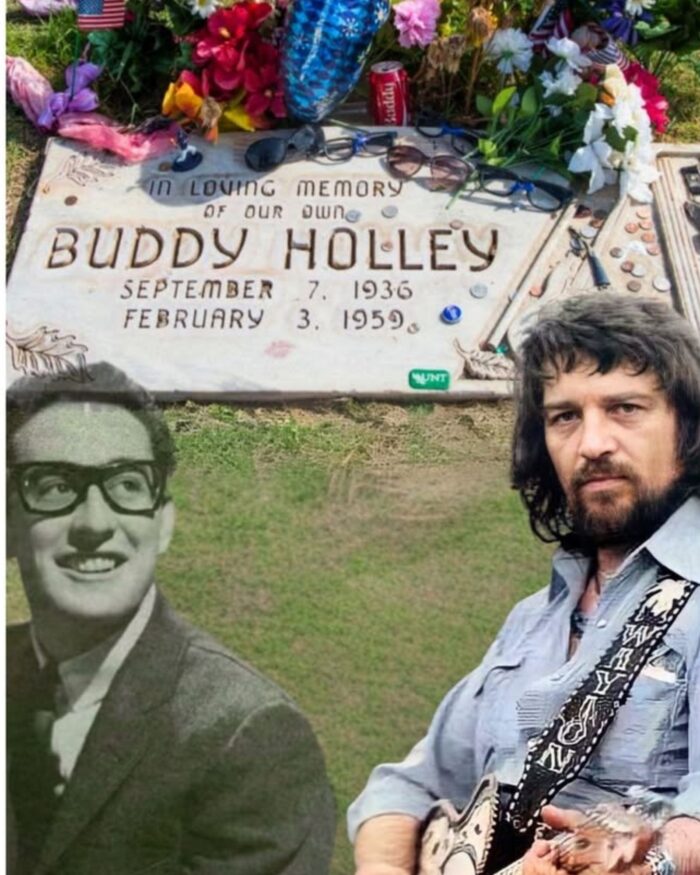
At just 21 years old, Waylon was a fledgling musician, thrilled to be on the road as part of Buddy Holly’s backing band for the grueling “Winter Dance Party Tour.” The tour was a brutal affair, with the musicians packed onto unreliable buses with broken heaters, traveling hundreds of miles between shows in the dead of the Midwestern winter. To escape one more miserable overnight ride, Holly chartered a small plane to fly from Clear Lake to their next stop in Moorhead, Minnesota.
After their show at the Surf Ballroom, a simple, compassionate gesture altered the course of music history. The Big Bopper was suffering badly from the flu and was desperate to avoid another freezing bus ride. Waylon Jennings, who had a seat on the plane, selflessly offered it to him. It was a small act of kindness, but one that saved his life and would shadow him forever.
For years, Waylon Jennings carried the heavy shadow of that night—a weight made nearly unbearable by his last, joking exchange with his friend and mentor, Buddy Holly. As they parted ways, Holly teased him about the freezing tour bus: “Well, I hope your ol’ bus freezes up.” Jennings, matching the playful tone, replied: “Well, I hope your ol’ plane crashes.” Those casual words—meant in good humor—would echo through his life with a tragic, bitter irony.
Instead of letting grief and guilt swallow him, Jennings forged a new path. He poured that pain, that intimate brush with tragedy, and the perspective of survival into his music. Over time, he became a driving force in the outlaw country movement, crafting songs with a rawness and honesty that felt lived-in. Having looked death in the eye, he had no patience for Nashville’s polished conventions—his music was unvarnished, gritty, and deeply human.
Though he seldom spoke about that night in detail, The Day the Music Died lingered in his life—not just as a wound, but as a quiet tribute to the friends he lost and the second chance he’d been given. His journey is a reminder that sometimes the smallest choices alter the entire course of our lives—and that the most powerful music often springs from the deepest, most enduring pain.
Related Posts
-
 George Strait Left in Awe as Toby Keith Delivered an Unforgettable Rendition of “Unwound”!
-
BEYONCÉ NOMINATED FOR FAVORITE FEMALE COUNTRY ARTIST AT 2025 AMERICAN MUSIC AWARDS — AND FANS ARE LOSING IT
-
Cody Johnson Brings Audience to Tears With “How Great Thou Art” at Texas Flood Relief Concert
-
Blackstock, ex-husband of Kelly Clarkson and stepson of Reba McEntire, has died


About The Author

John Simmon
John Simmon is a music journalist and entertainment writer with a passion for country music culture, artist stories, and the moments that happen off the stage. He has been following the country music scene for over a decade, covering everything from chart-breaking newcomers to the legends who shaped the genre. John believes the best stories in country music aren't always found in the music, they're found in the lives behind it.
