You’re Not “Just Getting Old”: 10 Gentle Stretches That May Help You Move More Comfortably
Feeling stiff when you get out of bed, stand after sitting, or move around after a long day is common. As we age, maintaining flexibility, strength, balance, and regular movement becomes increasingly important.
The good news? You don’t need an intense workout to keep your body moving. A simple stretching routine can be a useful part of an active lifestyle.
This guide covers 10 gentle stretches and mobility movements that target areas such as the hips, thighs, hamstrings, calves, glutes, and back.
Important: Stretching should feel gentle—not painful. If you have an injury, significant joint problems, osteoporosis, or another medical condition, ask a healthcare professional or physical therapist which movements are appropriate for you.
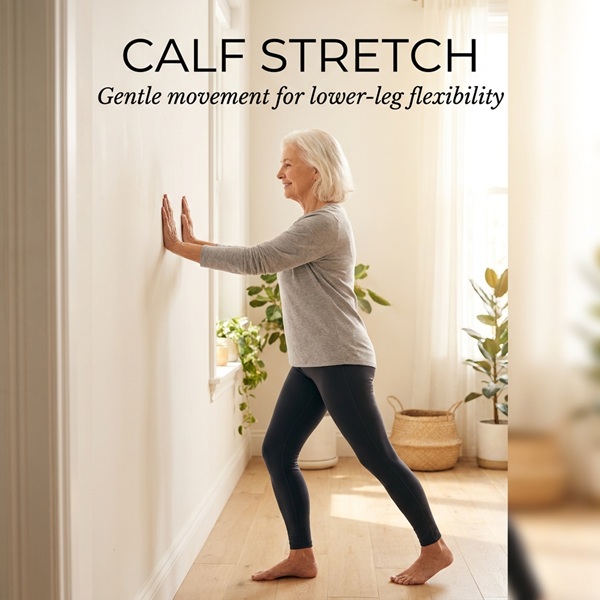
1. Calf Stretch
Tight calves can make walking and everyday movement feel less comfortable.
Stand facing a wall and place one foot behind the other. Keep the back heel down and gently lean forward until you feel a stretch in the calf.
Hold comfortably, then switch sides.
Targets: calves and lower legs.
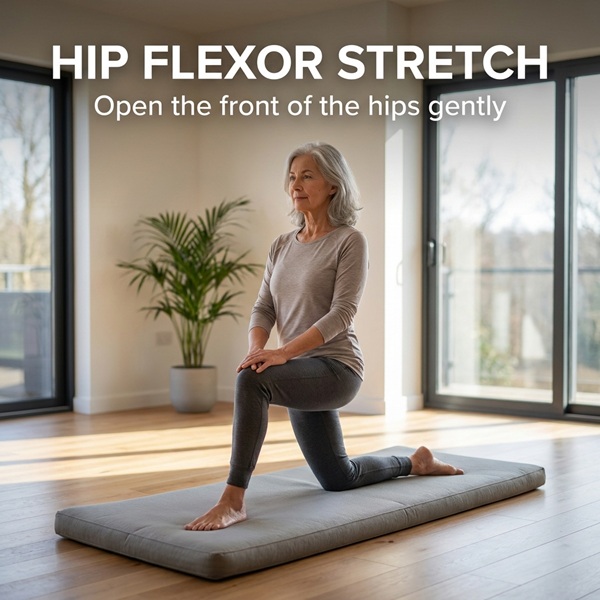
2. Hip Flexor Stretch
Spending a lot of time sitting can leave the muscles at the front of your hips feeling tight.
Try a gentle half-kneeling position, keeping your torso upright and slowly shifting your hips forward.
Targets: hip flexors and the front of the hips.
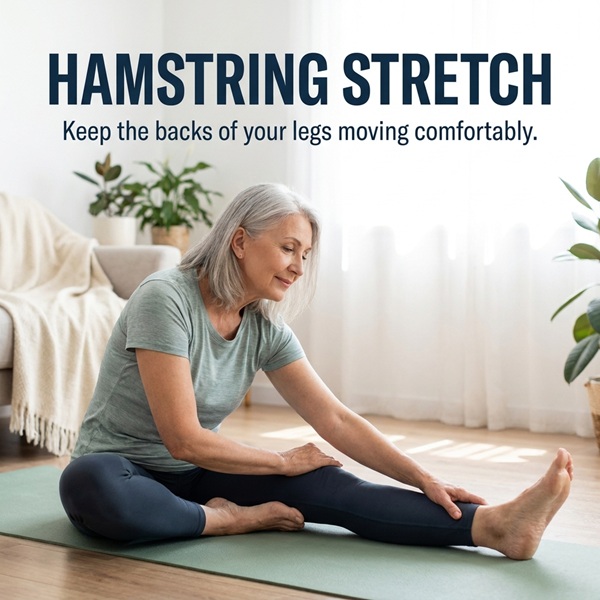
3. Hamstring Stretch
Your hamstrings are located along the back of your thighs.
A gentle seated or standing hamstring stretch can help maintain flexibility and make everyday movements more comfortable.
Avoid bouncing or forcing the stretch.
Targets: hamstrings.
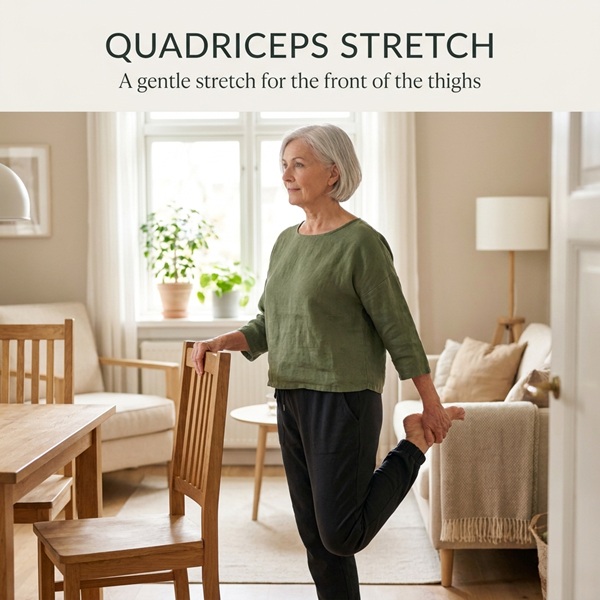
4. Standing Quadriceps Stretch
The quadriceps are the muscles at the front of your thighs.
While standing near a sturdy surface for support, bend one knee and gently bring your heel toward your body.
Keep your knees reasonably close together and stop if you feel pain.
Targets: quadriceps.
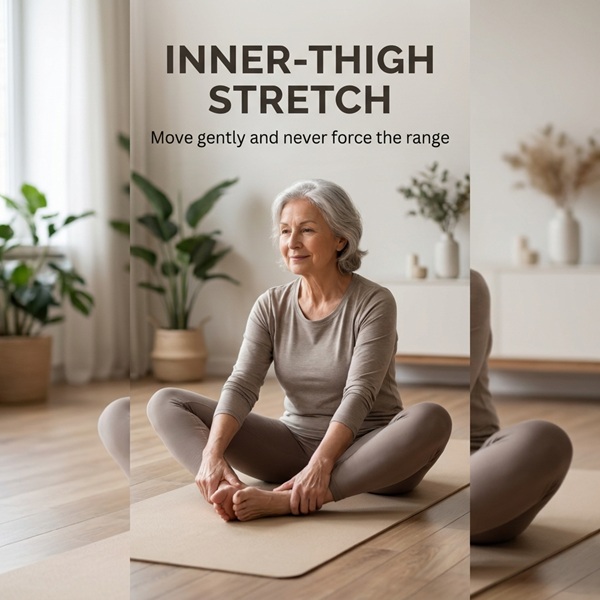
5. Inner-Thigh Stretch
Sit comfortably with your legs positioned apart or use another comfortable position that gently stretches the inside of the thighs.
Move slowly and avoid pushing into discomfort.
Targets: inner thighs and surrounding hip muscles.
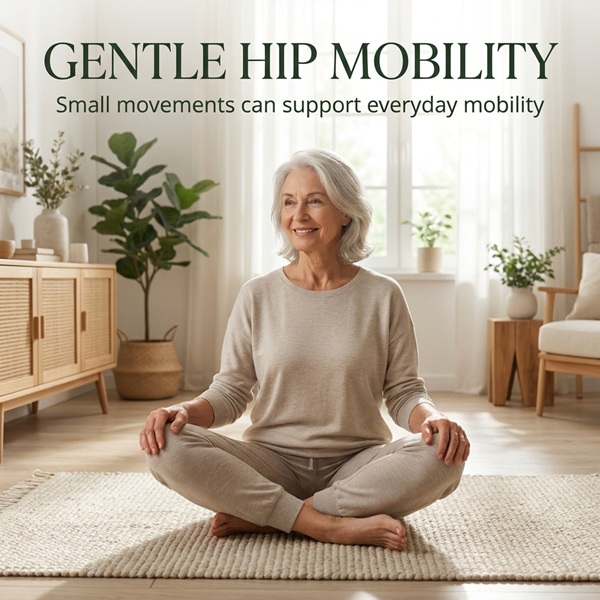
6. Gentle Hip Rotation
Hip mobility can be useful for everyday activities such as walking, getting dressed, and getting in and out of a chair.
Try slow, controlled movements rather than forcing your range of motion.
Targets: hips and surrounding muscles.
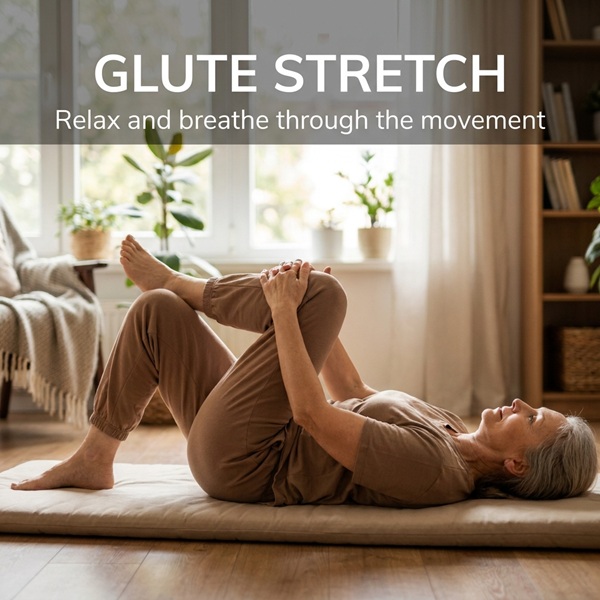
7. Glute Stretch
The gluteal muscles help support your hips and pelvis.
A gentle seated or lying glute stretch can help maintain flexibility around the hips.
Keep the movement controlled and breathe normally.
Targets: glutes and hips.
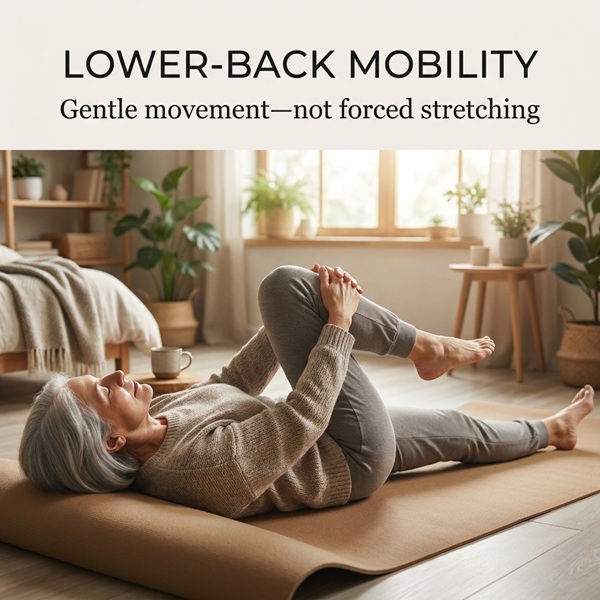
8. Lower-Back Mobility
Rather than aggressively stretching your lower back, gentle mobility exercises can help you move comfortably.
Slow pelvic movements or a comfortable knee-to-chest variation may be appropriate for some people.
Targets: lower back and hips.
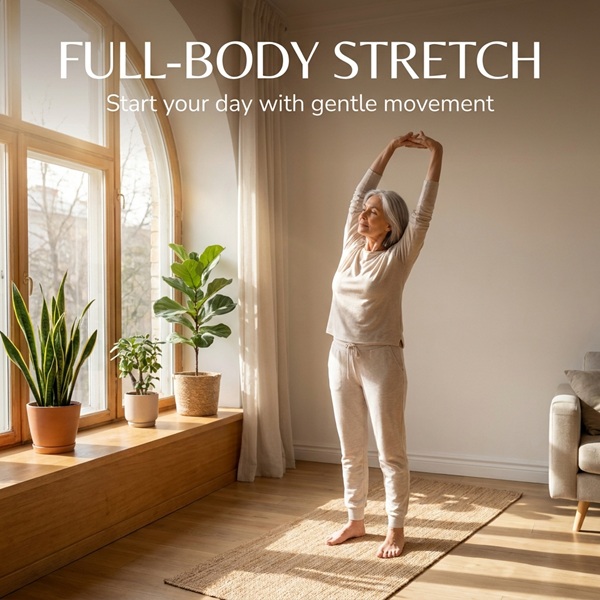
9. Full-Body Stretch
Sometimes a simple full-body movement is all you need.
Reach gently through your arms, lengthen your torso, and take a few slow breaths.
Think about creating comfortable movement rather than trying to stretch as far as possible.
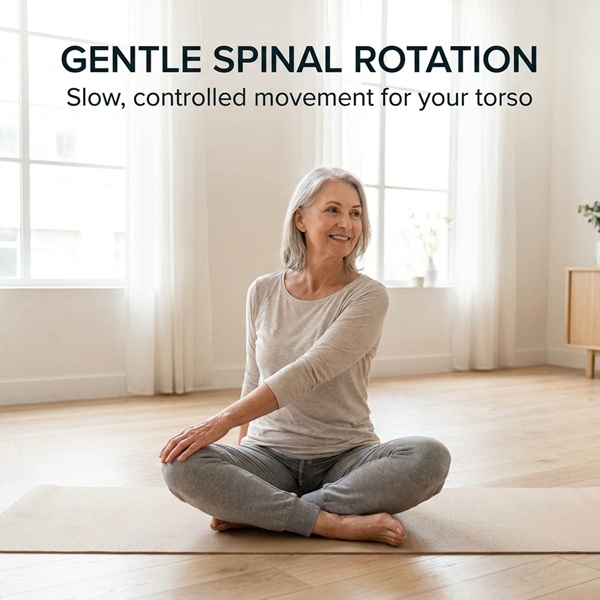
10. Gentle Spinal Rotation
Sit comfortably and slowly rotate your upper body to one side, then return to the center before switching sides.
Keep the movement smooth and controlled.
Targets: upper body, torso, and spinal mobility.
Why Flexibility Matters as You Get Older
Flexibility isn’t about being able to perform impressive yoga poses.
It’s about maintaining the ability to perform everyday tasks comfortably.
Good mobility can make activities such as:
- Walking
- Reaching overhead
- Bending down
- Getting dressed
- Climbing stairs
- Getting in and out of a chair
- Turning your body
- Performing household tasks
feel easier.
Stretching is only one piece of the puzzle, however. Strength training, balance exercises, walking, adequate recovery, and regular physical activity are also important components of healthy aging.
How Often Should You Stretch?
There’s no need to spend hours stretching.
A short routine performed consistently can be easier to maintain than an occasional long session.
Try incorporating gentle mobility work into your day, especially after you’ve warmed up or following periods of prolonged sitting.
Remember:
Consistency matters more than intensity.
A Simple 5-Minute Routine
If you’re short on time, try choosing five movements:
- Calf stretch — 30 seconds each side
- Hip flexor stretch — 30 seconds each side
- Hamstring stretch — 30 seconds each side
- Gentle glute stretch — 30 seconds each side
- Slow spinal rotation — several comfortable repetitions
Move slowly and breathe normally throughout.
Don’t Force Your Body
One of the biggest stretching mistakes is believing that more discomfort means a better stretch.
It doesn’t.
A stretch should generally feel gentle and controlled. Sharp pain, significant discomfort, dizziness, or unusual symptoms are reasons to stop.
If your flexibility has changed dramatically or a particular movement consistently causes pain, it’s worth discussing it with a qualified healthcare professional.
The Bottom Line
Getting older doesn’t mean you have to stop moving.
Your body may change over time, but regular movement can help you maintain mobility and independence.
You don’t need to touch your toes or become extremely flexible.
Start gently. Move consistently. Listen to your body.
And remember: sometimes the goal isn’t to stretch farther.
It’s simply to keep moving well for the life you want to live. ❤️
Related Posts
-
 Why Even the Wealthy Put Aluminum Foil in Boiling Water: The Surprising Reason
-
When Your Children Stop Respecting You: 8 Powerful Ways to Protect Your Peace and Rebuild the Relationship
-
Check It Out: For Those Who Haven’t Seen It Yet!
-
The Chef’s Ingenious Method for Flawlessly Peeled Hard-Boiled Eggs


About The Author

John Simmon
John Simmon is a music journalist and entertainment writer with a passion for country music culture, artist stories, and the moments that happen off the stage. He has been following the country music scene for over a decade, covering everything from chart-breaking newcomers to the legends who shaped the genre. John believes the best stories in country music aren't always found in the music, they're found in the lives behind it.
