Have You Ever Wondered What That Black Line Inside Shrimp Really Is? Here’s the Truth
Shrimp cocktail has been a favorite at family cookouts, holiday dinners, and seafood restaurants for decades. Served chilled with a flavorful cocktail sauce, it’s one of the most popular seafood appetizers around.
But if you’ve ever peeled a shrimp and noticed a dark line running down its back, you’ve probably wondered…
What exactly is it? And is it safe to eat?
The answer surprises many people.
Despite being commonly called a “vein,” that dark line isn’t actually a vein at all. It’s the shrimp’s digestive tract, which includes its stomach and intestines. Since shrimp spend much of their lives feeding along the ocean floor, the tract can contain tiny bits of sand, organic matter, and partially digested food.
Yes, it may contain waste, but that doesn’t necessarily make it unsafe.
Food safety experts say that as long as shrimp has been properly cooked, eating the digestive tract is generally not harmful. Cooking shrimp to an internal temperature of 145°F (63°C) destroys harmful bacteria and makes the seafood safe for most healthy people to enjoy.
That’s why accidentally eating the black line isn’t considered a health risk.
So why do so many people remove it?
The process, known as deveining, is mostly done for appearance and texture rather than safety. Sometimes the digestive tract can contain a little sand or grit, which can affect the taste and feel of the shrimp. Removing it simply creates a cleaner-looking, more enjoyable bite.
Many grocery stores and seafood markets even sell shrimp that has already been peeled and deveined, saving home cooks a little extra work.
However, it’s still very common to buy whole shrimp with the digestive tract intact, especially frozen or shell-on varieties.
Whether you remove it or not is completely up to you.
Some people always devein their shrimp because they prefer the cleaner presentation, while others don’t mind leaving it in since it poses very little risk after cooking.
The color of the tract can also vary depending on what the shrimp recently ate. It may appear black, dark brown, or even greenish, which is perfectly normal.
What matters most isn’t whether the shrimp has been deveined, but how it’s handled.
Always keep raw shrimp refrigerated, avoid cross-contamination with other foods, and cook it thoroughly before serving. Those simple steps are far more important for food safety than removing the dark line.
So the next time you spot that black strip inside a shrimp, you’ll know exactly what it is.
If you’d rather remove it, it’s an easy step that takes only a few seconds. If you choose to leave it in, properly cooked shrimp is still a delicious, safe, and protein-packed addition to your meal.
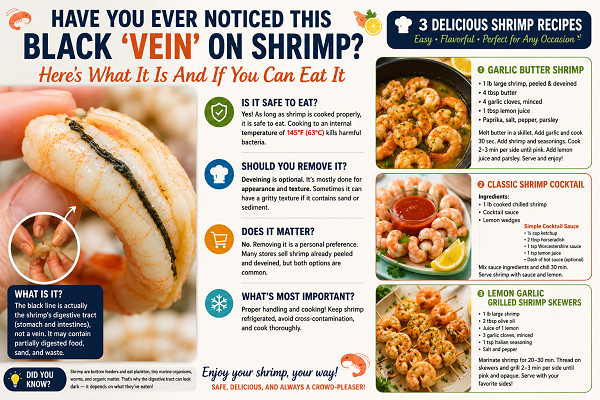
🍤 Three Delicious Shrimp Recipes to Try
🧄 Garlic Butter Shrimp
One of the quickest and most flavorful shrimp dishes you can make.
Ingredients:
- 1 lb large shrimp, peeled and deveined
- 4 tablespoons butter
- 4 garlic cloves, minced
- 1 tablespoon lemon juice
- 1 teaspoon paprika
- Salt and black pepper
- Fresh parsley
Directions:
Melt the butter in a skillet over medium heat. Add garlic and cook for about 30 seconds. Stir in the shrimp, paprika, salt, and pepper. Cook for 2-3 minutes per side until the shrimp turn pink and opaque. Finish with lemon juice and chopped parsley. Serve over rice, pasta, or with warm crusty bread.
🍤 Classic Shrimp Cocktail
Ingredients:
- 1 lb cooked chilled shrimp
- Cocktail sauce
- Fresh lemon wedges
Simple Cocktail Sauce
- ½ cup ketchup
- 2 tablespoons prepared horseradish
- 1 teaspoon Worcestershire sauce
- 1 teaspoon lemon juice
- A dash of hot sauce (optional)
Mix the sauce ingredients together and chill for 30 minutes. Arrange the shrimp around a bowl of sauce and garnish with lemon wedges.
🍋 Lemon Garlic Grilled Shrimp Skewers
Ingredients:
- 1 lb large shrimp
- 2 tablespoons olive oil
- Juice of one lemon
- 3 garlic cloves, minced
- 1 teaspoon Italian seasoning
- Salt and pepper
Directions:
Mix the olive oil, lemon juice, garlic, and seasonings. Marinate the shrimp for 20-30 minutes. Thread onto skewers and grill over medium-high heat for about 2-3 minutes per side. Serve with grilled vegetables, baked potatoes, or a fresh summer salad.
Whether you enjoy shrimp in a refreshing cocktail, sizzling in garlic butter, or fresh off the grill, it’s one of the easiest and most versatile seafood dishes you can make. Just remember: proper storage, safe handling, and thorough cooking are far more important than whether the shrimp has been deveined.
Enjoy your meal! 🍤😊
Related Posts



About The Author

John Simmon
John Simmon is a music journalist and entertainment writer with a passion for country music culture, artist stories, and the moments that happen off the stage. He has been following the country music scene for over a decade, covering everything from chart-breaking newcomers to the legends who shaped the genre. John believes the best stories in country music aren't always found in the music, they're found in the lives behind it.
